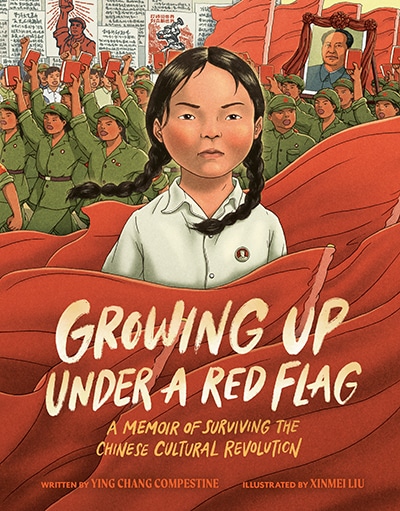
Growing Up Under a Red Flag: A Memoir of Surviving the Chinese Cultural Revolution
Ying Chang Compestine; illustrated by Xinmei Liu
(Rocky Pond Books)
(Rocky Pond Books)
- Non-fiction
- Set in China
Key words: Autobiography, strong girls, resilience, family
Ying Chang Compestine was a young girl in 1966 when Mao launched his Cultural Revolution to reclaim power and eliminate non-communist values in the country. His army began punishing and arresting people who didn’t agree with him, foreign reading material was banned, and children were all required to dress in uniform and carry the Little Red Book of Mao’s teachings. It was a time of fear, mayhem, and scarcity that lasted until Mao’s death ten years later, when Ying was thirteen. Through those ten harrowing years, Ying’s parents found ways to secretly educate her and allow her dreams of visiting America to stay vibrant. Now she brings her childhood story and China’s history to life in this absorbing and beautiful picture book.
Growing Up under a Red Flag is a child-centered, memoir-style picture book that portrays everyday life in the People’s Republic of China during the Cultural Revolution (1966–1976). Its vivid illustrations and personal narrative contain layered historical and cultural meanings that may not be immediately accessible to readers unfamiliar with this period. These notes provide essential context, explain key symbols and terms, and highlight how the story reflects both a specific historical moment and broader cultural themes.
One of the most prominent symbols in the book is the red flag, which appears throughout the story: in schools and public spaces, and at political gatherings. In China, “red flag” refers to the national flag of the People’s Republic of China, adopted in 1949. The color red symbolizes revolution, sacrifice, and socialism. For children like Ying, the flag was not just a national emblem but a constant presence in daily life. Flag-raising ceremonies and the flag’s visibility in schools reinforced collective identity and patriotism from an early age.
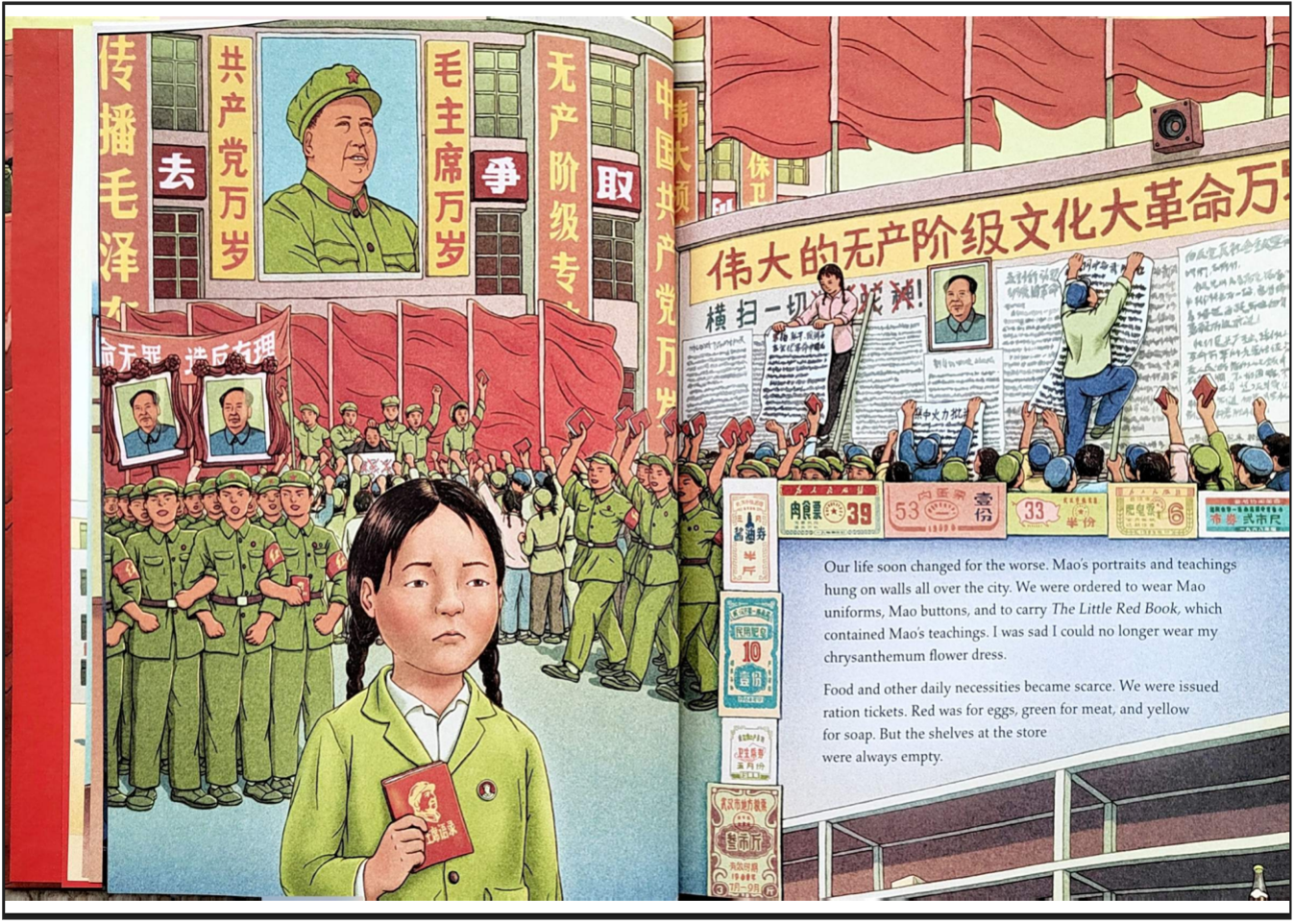
The story is set during the Cultural Revolution, a political movement initiated by Chairman Mao Zedong to reassert ideological control and reshape society. During this period, political ideology permeated all aspects of life, including childhood and education. The book illustrates this through revolutionary slogans on walls, mandatory marches, and classrooms dominated by political instruction rather than academic learning. Children were expected to memorize Mao’s teachings and participate in collective activities that emphasized loyalty and conformity.
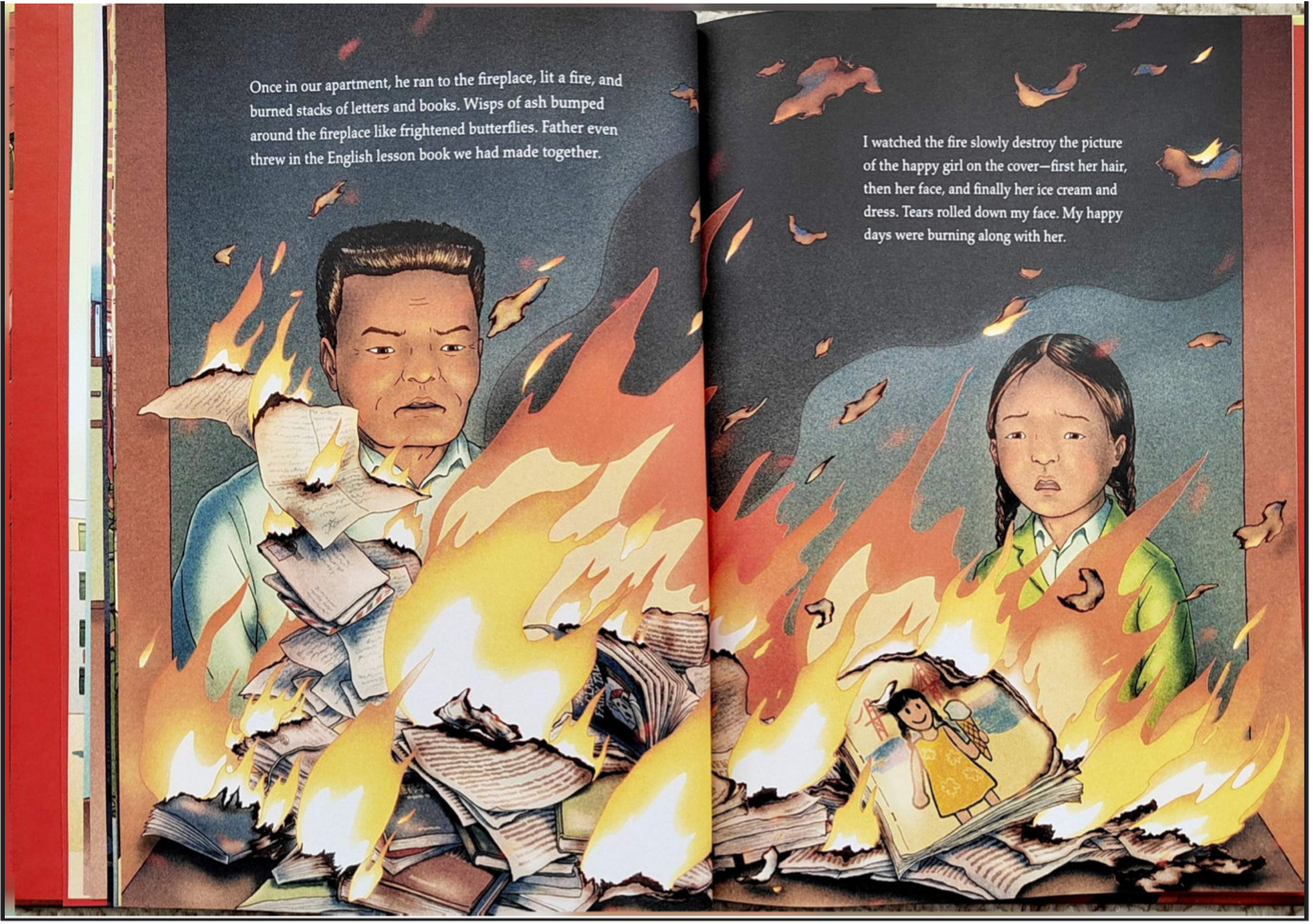
Education during this period extended beyond academics to include ongoing political and moral training. Students were taught to prioritize the collective over the individual and to demonstrate unwavering loyalty to authority. This ideology also shaped family life. For example, Ying’s father burned English books and asked Ying not to speak English, as foreign languages and Western influences were viewed with suspicion during the Cultural Revolution.
Several key terms and concepts are essential to understanding the book:
- Red Guards: (Hongweibing, 红卫兵; pronounced “hong way bing”)
Red guards were groups of mostly older students who acted as enforcers of Mao’s ideology. They wore red armbands emblazoned with the words “Red Guards.” The Red Guards organized rallies; they attacked anyone and anything labeled “counterrevolutionary.” In the book, they are responsible for the arrest of Ying’s father and are closely associated with the social upheaval that characterized the Cultural Revolution.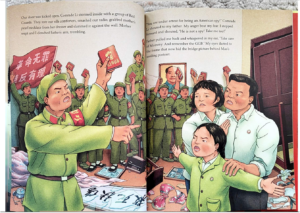
An illustration of the Red Guards ransacking Ying’s family’s home
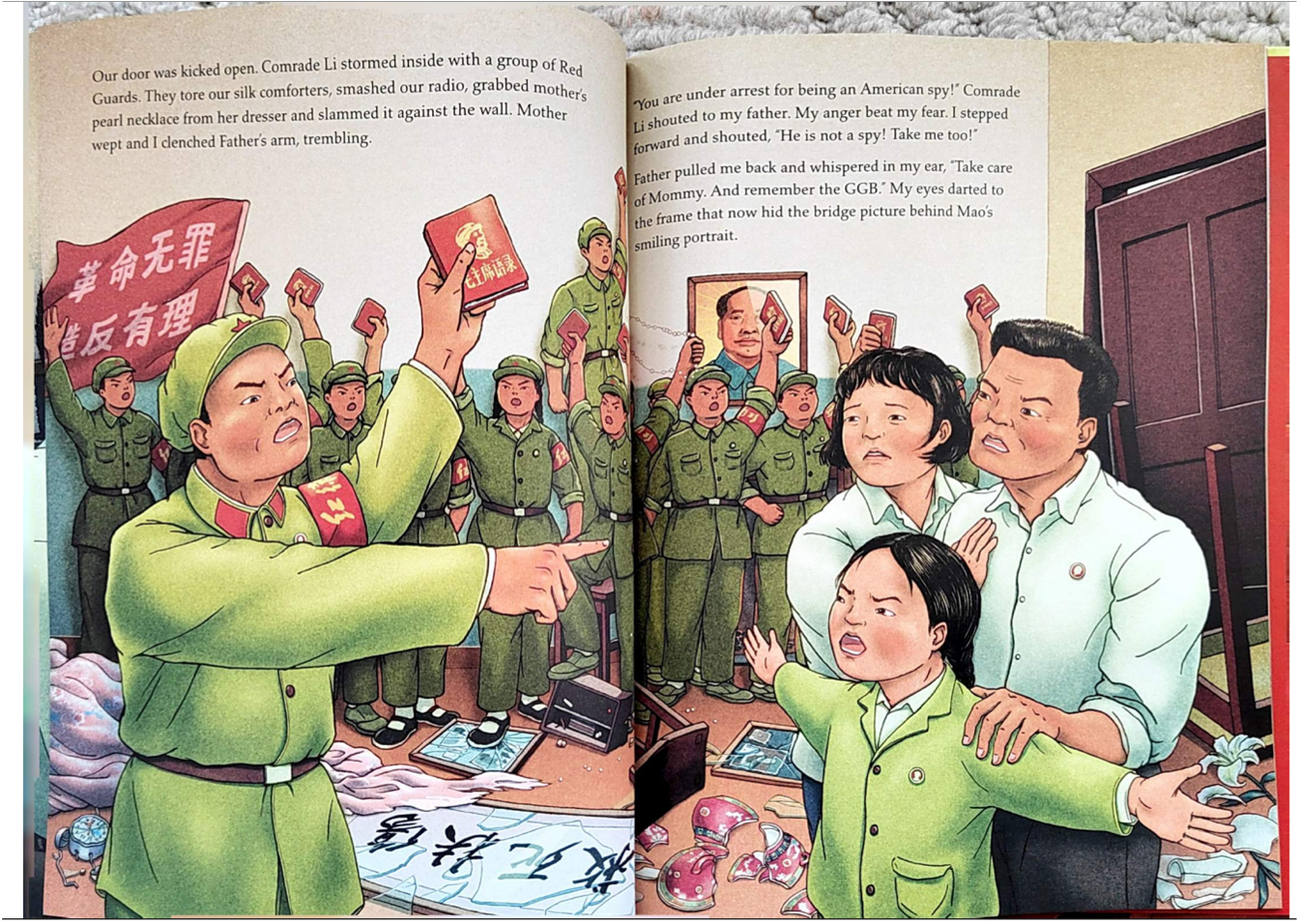
- The Little Red Book: (Quotations from Chairman Mao, 毛主席语录; pronounced “mao joo-shee yoo-luoh”) Commonly known as the “Little Red Book,” this collection of Mao Zedong’s quotations was widely distributed during the Cultural Revolution. All citizens, including schoolchildren, were expected to read, memorize, and carry the Little Red Book with them. It served both as a political guide and a symbol of loyalty to Mao. In classrooms, students often studied and recited passages from it as part of their daily routine. The scene in which Ying’s father was arrested, with all the Red Guards holding up the Little Red Book, serves as a vivid example.
- Chairman Mao Badge (毛主席像章; pronounced “mao joo-shee syang-jahng”)
During the Cultural Revolution, Chairman Mao badges were extremely popular, worn by people of all ages, including children. Wearing the badge was a sign of loyalty and devotion to Mao and the Communist Party. Some people collected badges, which could even become objects of exchange or pride. Badges symbolized political correctness and allegiance, and not having one—or not displaying it properly—could draw criticism. In this book, all the characters wear a Mao badge.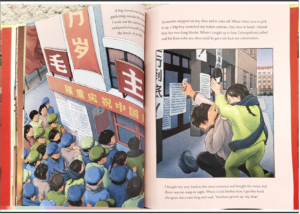
An illustration of the incident outside the market - Ration Tickets (Liangpiao, 粮票; pronounced “lyahng pyao”)
Ration tickets were used in China from the 1950s through the 1980s to control the distribution of essential goods such as grain, oil, meat, and cloth. Because many goods were scarce, people could not simply buy what they wanted—they also needed the appropriate ration tickets. Families carefully saved and used these tickets to obtain daily necessities. For children, rationing shaped everyday life, influencing what they ate and wore. While Ying is waiting in a crowd outside a food market, her ration tickets are stolen by a boy. When she chases the boy and gets the tickets back to buy meat for the family, her mother considers it a big step in her growth. This incident reflects the importance of ration tickets during the Cultural Revolution. When we read that Ying had to cut her hair because she had no soap to wash the lice out of her hair, we can empathize with the sorrow Ying felt.

As a memoir, the book reflects the author’s personal perspective rather than a comprehensive historical account. It presents events through a child’s understanding, which means that some aspects of the Cultural Revolution—such as large-scale violence—are only partially represented. However, this perspective is also the book’s strength. By focusing on everyday experiences—fear of the Red Guards, loss of personal belongings, and separation from family—it humanizes a complex historical period.
The child’s viewpoint allows readers to connect emotionally with history. Small moments, such as hiding a forbidden picture or having to cut off her long hair, illustrate the broader impact of political ideology on individual lives. At the same time, educators should encourage readers to consider whose perspective is represented and what experiences may be missing.
In relation to contemporary China, the book shows both continuity and change. Some practices, such as flag-raising ceremonies and group activities, still exist today. However, the intensity of ideological control has significantly decreased. Modern education places greater emphasis on individual achievement, creativity, and global awareness.
Ultimately, this memoir provides an intimate and accessible window into a complex historical period. Through its child-centered narrative and visual storytelling, it invites readers to engage with history on a human level while encouraging further exploration and critical thinking.
Author: Huan Li, Chinese children’s literature specialist, writer and teacher of children’s literature
2026
© 2024 NCTAsia