

Noodles on a Bicycle
Kyo Maclear; illustrated by Gracey Zhang
(Random House Studio)
(Random House Studio)
- Fiction
- Set in Japan
Key words: Food, occupations, transportation, city life
When the deliverymen set off in the morning, the children wait for the flicker of pedal and wheel. It’s the demae– delivery men– setting off to deliver steaming trays of noodles to hungry customers all over the city. They are acrobats: whizzing past other bicycles, soaring around curves, avoiding the black smoke of motorcycles. When the children see them, they want to be them. And so they practice with bowls of wobbling water stacked on trays. The day passes, and, finally, exhausted, the demae return home, to their families, and, yes, to steaming bowls of noodles.
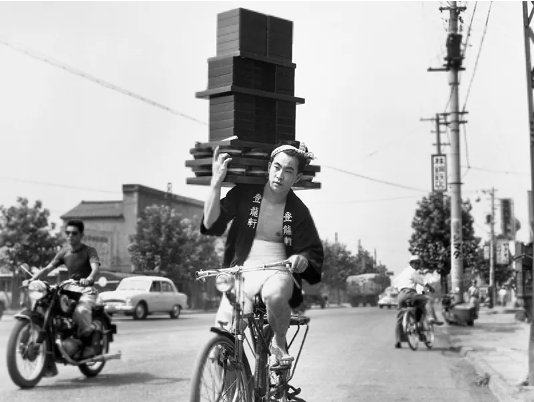
Noodles on a Bicycle takes us back to a once-common sight on the busy streets of downtown Tokyo. Balancing towering trays of noodles on their shoulders, the demae, or cycling deliverymen, would cruise along busy streets with only one hand gripping the handlebar.
Demae saw their heyday from the 1930s to the 1970s. The bicycles were eventually replaced by motorbikes, but demae still linger in the memories of generations of Japanese noodle lovers and are an enduring chapter in the history of Japan’s centuries-long noodle culture.
https://rarehistoricalphotos.com/japan-soba-delivery-old-photos/
Although scholars continue to debate exactly where noodles first originated, archaeological evidence shows that noodle-like food was eaten in China thousands of years ago. As noodle traditions spread across East Asia, different societies adapted them to local ingredients and tastes. They can be made from wheat, rice, millet, buckwheat, mung beans, and other ingredients. They may be thin or thick, flat or round, and can be boiled, stir-fried, steamed, or served cold. Different regions also developed specialized techniques. Noodles can be hand-pulled, cut, or shaved, demonstrating the craftsmanship involved in traditional food preparation.
(photo by Brenda G. Jordan)
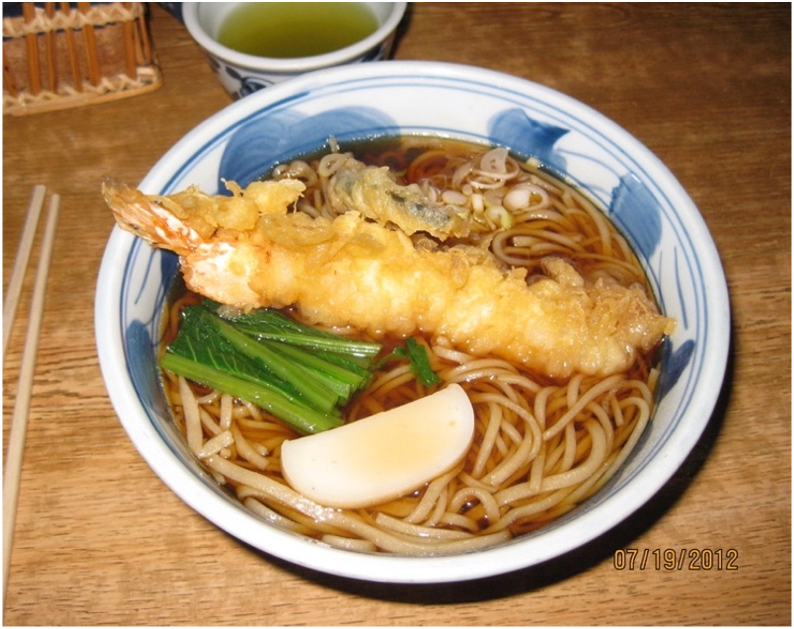
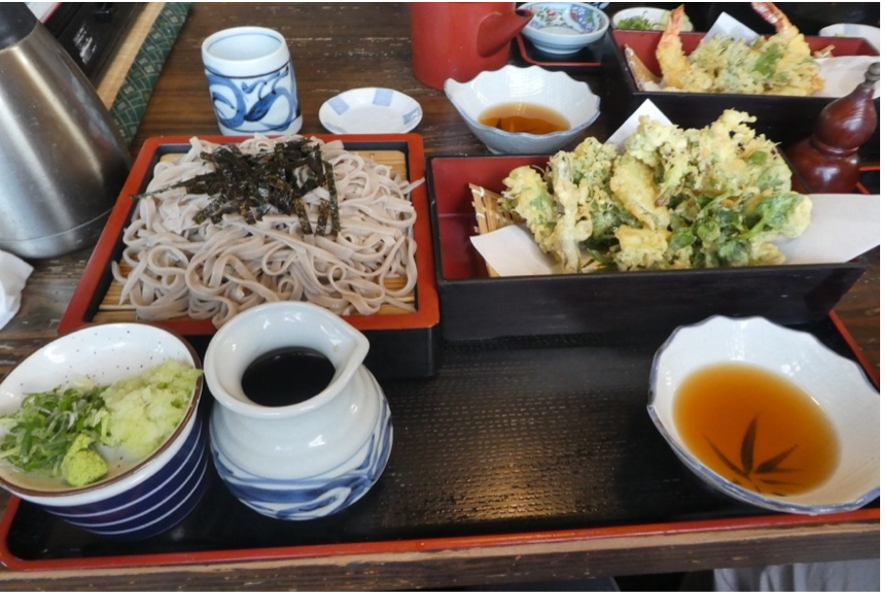
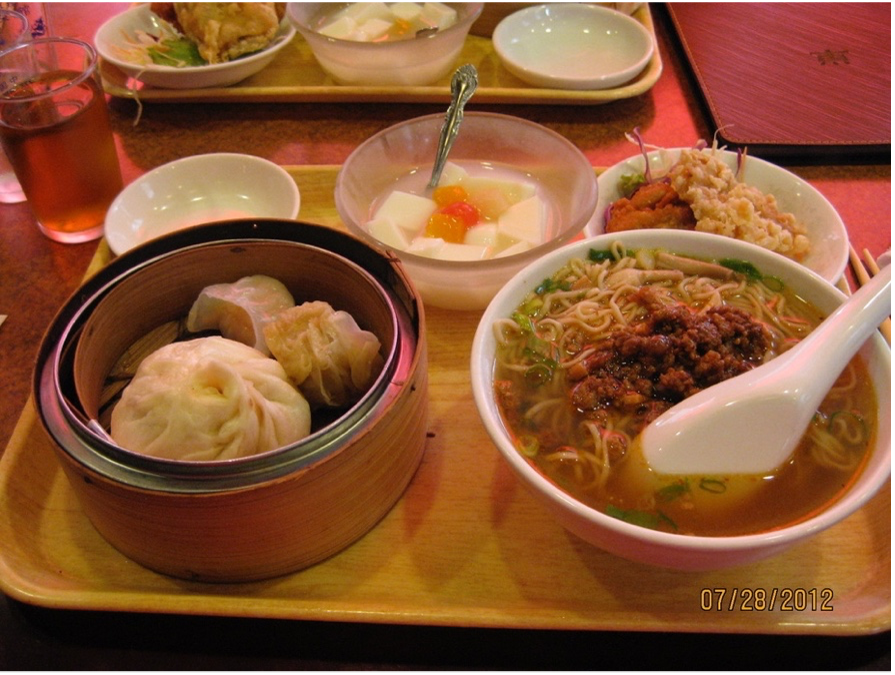
Noodles are an important part of everyday life in Japan. Although noodles have a long history across Asia, Japan developed many distinctive noodle traditions. Some of the best-known examples are udon, soba, and ramen. Udon noodles are thick, soft, and chewy, while soba noodles are thinner and are usually made from buckwheat. Soba can be served hot or cold, depending on the dish and the season. Ramen were introduced to Japan from China in the late nineteenth century; by the mid-twentieth century these wheat noodles had become popular throughout the country. Different regions of Japan are known for different styles of noodles, and families may have their own favorite ways to prepare and eat them.
(photo by Brenda G. Jordan)
Noodles can also have special cultural meaning. One example is toshikoshi soba, or “year-crossing noodles,” traditionally eaten on New Year’s Eve. These long noodles are associated with longevity and good fortune, while the custom of eating them at the end of the year symbolizes moving from the old year into the new one.
(photo by Brenda G. Jordan)
Noodles therefore offer more than nourishment. Their ingredients, preparation methods, regional varieties, and symbolic meaning reveal how everyday food can preserve history, express cultural values, and connect generations. A simple bowl of noodles can represent centuries of culinary creativity and cultural tradition.
Author: Sophia Geng, Professor, James and Margaret Tseng Loe Chair for China Studies, Saint Vincent College, Latrobe, PA
2026
© 2024 NCTAsia