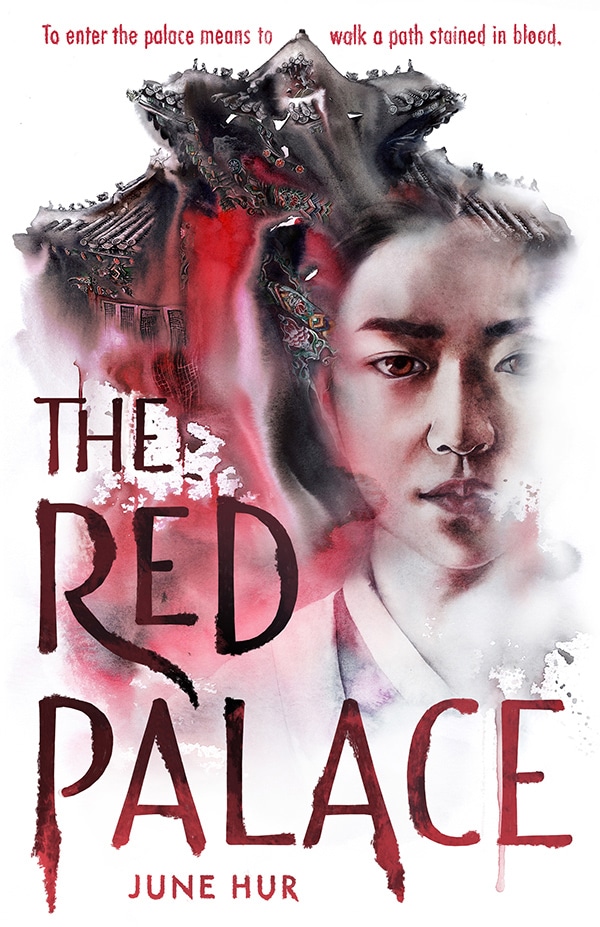
The Red Palace
June Hur (Feiwel & Friends)
- Fiction
- Set in Korea
Keywords: Mystery, romance, women, perseverance
To enter the palace means to walk a path stained in blood…
Joseon (Korea), 1758. There are few options available to illegitimate daughters in the capital city, but through hard work and study, eighteen-year-old Hyeon has earned a position as a palace nurse. All she wants is to keep her head down, do a good job, and perhaps finally win her estranged father’s approval.
But Hyeon is suddenly thrust into the dark and dangerous world of court politics when someone murders four women in a single night, and the prime suspect is Hyeon’s closest friend and mentor. Determined to prove her beloved teacher’s innocence, Hyeon launches her own secret investigation.
In her hunt for the truth, she encounters Eojin, a young police inspector also searching for the killer. When evidence begins to point to the Crown Prince himself as the murderer, Hyeon and Eojin must work together to search the darkest corners of the palace to uncover the deadly secrets behind the bloodshed.
June Hur’s Red Palace is a richly detailed murder mystery set in mid-1700s Joseon Korea (1392–1910). Hur’s exquisite attention to detail brings the Joseon period to life for the reader. To better understand the context of the novel, here is a brief overview of the Joseon period.
The Joseon Dynasty: Confucianism, the Uinyeo system, and Prince Sado
Confucianism as State Ideology
The Joseon dynasty lasted over 500 years, from 1392 to 1910. It started when the military leader Yi Seonggye overthrew the Goryeo dynasty (918–1392) and set up his new capital at Hanyang (modern-day Seoul). The new dynasty embraced Neo-Confucianism as its guiding philosophy. This was not just a political choice. It completely reshaped how Korea was governed, how people were educated, and how they lived their daily lives.
Power in Joseon Korea belonged to the yangban, the scholar-official class. They had to prove themselves by mastering the Confucian classics and passing difficult civil service examinations based on the Chinese imperial system. As model Confucians, their days were filled with studying, running the government bureaucracy, performing ancestral rituals, and setting an example for everyone else in society.
Neo-Confucianism brought a system of rules for how people should behave—both at home and in society. At the heart of this system were the Five Relationships: ruler and subject, father and son, husband and wife, elder brother and younger brother, and friend and friend. These relationships defined how Koreans interacted with each other in daily life. Rituals, ancestor worship, and filial piety became the essential fabric of everyday life. Through these efforts, Joseon Korea was deliberately shaping itself into a model Confucian society.
Stratified Society and Social Rigidity
Joseon society had a rigid hereditary class system that made social mobility nearly impossible.
At the top were the yangban aristocrats, who controlled political power and land. They monopolized education and the civil service exams, keeping their privileged status across generations. The yangban class accounted for about 10 percent of the population.
Below them were the jungin, or “middle people.” They were educated professionals, including doctors, interpreters, and astronomers, for example, who were essential to the government but could not advance beyond their rank.
The sangmin commoners made up the majority. They were farmers, artisans, and merchants. Farmers were theoretically respected as producers but faced heavy taxes and forced labor. Merchants, though economically important, ranked lowest among “honorable” occupations because Confucians were taught to see them as parasites, profiting from the work of others.
At the bottom were the cheonmin, or “base people.” They included slaves (nobi), butchers, entertainers, and outcasts.
Women in Joseon Society
Confucian ideology created a deeply patriarchal society that severely restricted women’s autonomy. The principle of male superiority shaped everything from family structure to legal rights. The ideal woman was chaste, obedient, and self-sacrificing. Strict gender segregation was the social and legal norm.
Uinyeo System
Uinyeo were highly educated and trained female physician assistants who, despite their expertise, were paradoxically still considered members of the cheonmin. The uinyeo system was established in 1406 by King Taejong to address the Confucian taboo against male physicians treating female patients.
Uinyeo acted as nurses, midwives, and physicians; their duties included acupuncture, pulse diagnosis, and dispensing medicine to female patients. They served either within the Royal Infirmary or at the Hyeminseo, the Joseon public health facility for commoners (1392–1882).
The Royal Family
Old Doctrine and New Doctrine
The late Joseon (1592–1910) saw intense factional strife amongst the yangban class during the seventeenth and eighteenth centuries. King Geyongyo (d. 1724) favored the Soron or “Young Doctrine” which was a branch of the Reformist school or Sirhak. In general, this faction promoted the spread of useful knowledge and political, social and economic reforms that increased the well-being of the commoners. His son, King Yeongjyo (r. 1724-1776) was a staunch supporter of the Noron or the “Old Doctrine” that favored a strict adherence to Neo-Confucianism. He is generally considered one of the greatest Joseon kings.
The Tragedy of Crown Prince Yi Seon
King Yeongjo’s only son, Crown Prince Yi Seon, is a tragic figure. Believed to have suffered from mental illness, he had a deeply fraught relationship with his father, and was responsible for the murder and rape of numerous people both inside and outside the palace. His wife, Crown Princess Hyegyong, mother of the Grand Heir, documented her husband’s secret wanderings and his deteriorating mental health in her work, The Memoirs of Lady Hyegyong: The Autobiographical Writings of a Crown Princess of Eighteenth-Century Korea. Fearing dynastic decline, King Yeongjo was persuaded by the Crown Prince’s mother to take action. Accordingly, he ordered his son sealed inside a rice chest, where the prince remained until he died approximately a week later. Upon his death on July 12th, 1762, he was posthumously renamed Sado, meaning “to think of with great sorrow.” King Yeongjo was ultimately succeeded by his grandson, who ascended the throne as King Sunjo in 1800 at just ten years of age.
Legacy
The Joseon dynasty, which lasted from 1392 to 1910, was deeply influenced by Neo-Confucian philosophy, which governed everything from political structure to daily life. Society was rigidly stratified, with the yangban scholar-official class at the top and the cheonmin at the bottom, leaving little room for social mobility. Women faced severe restrictions under Confucian patriarchal norms, though innovations like the Uinyeo system reflected attempts to navigate these constraints. The late Joseon was marked by factional conflict between reformist and orthodox Confucian factions, and by personal tragedies within the royal Yi family. Though it ended with Japanese annexation, the Joseon period profoundly shaped Korea in ways that endure to the present day.
Author: Lori A. Snyder, History Teacher, Longmeadow High School, Massachusetts
2026
Bibliography
Han, Hee-sook. “Women’s Life during the Choson Dynasty.” International Journal of Korean History 6 (December 2004): 113–153. Accessed February 27, 2026. https://ijkh.khistory.org/upload/pdf/6_05.pdf.
The Memoirs of Lady Hyegyong: The Autobiographical Writings of a Crown Princess of Eighteenth-Century Korea. Translated with an introduction and annotations by JaHyun Kim Haboush. Foreword by Dorothy Ko. Berkeley: University of California Press, 2006. Accessed February 20, 2026. https://web.english.upenn.edu/~cavitch/pdf-library/Hyegyong_Memoirs.pdf
Shaffer, David E. “Choson Kingdom.” In Encyclopedia of Modern Asia, edited by Karen Christensen and David Levinson, vol. 2, 60–62. New York: Thomson Gale (Charles Scribner’s Sons), 2002.
Seth, Michael J. “Confucian Korea: The Joseon Dynasty (1392–1910).” In A Brief History of Korea: Isolation, War, Despotism and Revival, The Fascinating Story of a Resilient but Divided People. North Clarendon, VT: Tuttle Publishing, 2019.
Like every other teacher, I compete with reality television, crime dramas, and TikTok videos for the attention of my students. The Red Palace by June Hur is the answer, with as much danger, intrigue, and drama as any episode of CSI, slightly gruesome crime scenes, and even a touch of romance. This book is a page turner! And lest anyone think that this text is in any way sensational, a quick search of Crown Prince Jangheon (also known as Crown Prince Sado) will remind readers that truth is often stranger than fiction.
Our narrator is a young woman of eighteen, Hyeon, the daughter of a concubine and a courtier, Lord Shin. Her lowly status and gender offer Hyeon few opportunities, but through education, she has earned the coveted position of palace nurse. Late one evening, when Hyeon and her friend Jieun should be leaving, they are asked to attend to the Crown Prince. While working with the Court Physician tending to the Prince, news of a terrible crime reaches the palace. Four nurses at the Hyeminseo—the medical facility where Hyeon studied since the age of eight—have been murdered. When Hyeon learns that her mentor, Nurse Jeongsu, has been arrested for the crimes, she displays bravery and tenacity far beyond her years as she throws herself into the investigation, seeking to prove her teacher’s innocence.
At the heart of this mystery are Hyeon’s relationships, and the realization that her parents, friends, and even her mentor are far more complex individuals than she had understood. As such, this text is well suited to high school students, who are often seeking to better understand who they are and their place in the world, and discovering that the other people in their lives are as multilayered as they are.
An interesting pre-reading activity would ask students to consider who has helped them to become who they are. What lengths might they go to help someone important to them? And what if helping that person meant risking your reputation at school, at home, and with your friends?
Hyeon has long sought the approval of her father, Lord Shin, and as the story progresses, she learns that he may not be as worthy of her respect as she once thought. At the same time, she realizes that her mother is stronger and more loving than she previously realized. As Hyeon learns more about her parents, she learns more about herself, and is ultimately forced to create a future for herself very different from the one she had previously envisioned. Instead of becoming immersed in self-pity, Hyeon accepts this turn of events, and emerges as an independent and self-reliant young woman. For teenage girls in particular, the fact that the narrator is a strong woman is important; despite being set in the 18th century, Hyeon is as resilient as any contemporary female heroine.
In working with the young police inspector, Eojin, Hyeon encounters someone who is as bold and fearless as she. They form a friendship that eventually develops into love; however, this is only suggested as the book reaches its conclusion. Their relationship is built on mutual respect and admiration, underscoring in a subtle yet powerful way that relationships are often best formed on a foundation of friendship and respect. At one point, the two work together form a timeline that includes similar mysterious deaths from the past, the four deaths at the Hyeminseo, as well as recent victims. At this point in the text, literature students could be divided into small groups, each responsible for mapping out what is known about different characters. The class could share their findings and come to a conclusion (or not) about who might be guilty of the various crimes. Is there more than one murderer in the capital city? This exercise will encourage close reading and further reinforce the importance of relationships. In this world, a servant can be as significant as a courtier, depending on what they know or may have witnessed. The whispering and rumors that swirl around the palace is somewhat reminiscent of a high school.
The author’s style is highly descriptive, but not overly graphic, which is appreciated when describing the various crime scenes. As a nurse, Hyeon is well-versed in anatomy, an understanding of herbs and their medicinal properties, as well as tools used by those in the medical field. For students interested in anatomy or biology, this book will be especially rewarding. Other topics worth further research include the medicinal plants mentioned and the overall approach to health care at this time in Korea, including the connections made between physical and mental health.
Many of the scenes throughout the book create strong visuals in the reader’s mind that would be well suited to drawing, enabling teachers to encourage students to illustrate what they see as a pivotal or significant moment in the narrative. As an art teacher, I see more and more of my students using various computer programs with which to draw, and this could be a way to combine technology, a studio art exercise, and literature. As I was reading, I was continually struck by the author’s use of the weather as both a foreshadowing device and a way to create a strong sense of mood. For students who are less comfortable or interested in drawing realistically, taking such a scene and focusing on representing the mood could enable students to work abstractly with color, in the form of a collage, for example.
The rich descriptions of the palace complex lend themselves to visual representations or further research into the architecture of palaces in Korea during the Joseon period. In addition to the homes of the rich and powerful, the author takes us to more humble domestic interiors, and these too would be worth further study. Also worthwhile would be a study of the dress of both commoners and the royal family, from the kinds of fabrics used to construct their garments as well as their hairstyles, all beautifully described throughout the text. Hyeon wears a uniform that denotes her role and status, and it quickly becomes evident that dress plays an important role in Korean culture at this time.
Hyeon is an intelligent and strong narrator, a complex young woman with an interesting story to tell. Overall, this book is an interesting and fast-paced thriller that will immediately engage students. It also lends itself to close reading and offers the educator the opportunity to show students how to be active readers by taking notes, maintaining an ongoing list of the characters, and noting their relationships to others in the text. There is also the opportunity for creating a vocabulary list, complete with definitions of unfamiliar and new words.
Author: Kachina Leigh, studio art and AP Art History teacher
2024
NCTA webinar with author June Hur.
An ABA Indie Bestseller
A Junior Library Guild Selection
Forbes Most Anticipated Book of 2022 Selection
2023 Edgar Award for Best Young Adult Book from Mystery Writers of America
© 2024 NCTAsia