
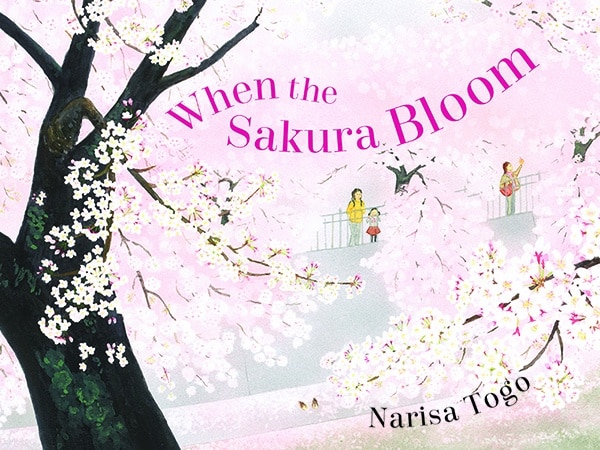
When the Sakura Bloom
Narisa Togo (Berbay Publishing)
- Fiction
- Set in Japan
Keywords: Nature, city life, holidays, mindfulness
When the Sakura Bloom by Nariso Togo sheds light on the cultural significance of cherry blossom season in Japan, and an insight into the unique mindset of its people. Through subtle text and gentle imagery readers will see the importance of slowing down to appreciate the moment.
When the Sakura Bloom is an understated illustration of the importance of celebrating the fleeting, delicate beauty of nature.
1. Connection to Nature in Japanese Culture
When the Sakura Bloom revolves around the annual blooming of the Sakura (cherry) trees and the social events associated with them—reflecting the deep connection Japanese culture has with the natural world. Japanese society in the twenty-first century is highly urbanized, yet agrarian cycles and Shinto celebrations continue to figure prominently in daily life. Even in Tokyo, Shinto shrines and Buddhist temples can be found in parks and wooded areas. This predilection for sacred spaces to be set apart in natural environments is also incorporated into festivals and holidays.
2. Shinto Festivals & Celebrations in Japanese Culture
Shinto (“the way of the gods”) is the indigenous belief system. It is usually described in academic terms as an animistic tradition; this refers to the Shinto belief that every aspect of the natural world has an animating spirit, or kami (pronounced: KAH-me). These kami are believed to pervade the natural world, with certain natural features that have a striking presence—whether it is an ancient tree or an imposing mountain peak—being set aside for worship in a distinct way. Kami can even be historical personages who are associated with certain miracles or acts attributed to them by people who think they have intervened after their death. The role of kami is often limited to the physical spaces where they reside and are worshipped, through festivals and other celebrations.
Festivals (matsuri) and other traditional celebrations are an essential part of Japanese culture. During festivals, many local people join in, participating in parades that incorporate the deities of the Shinto shrine or Buddhist temple. Portable shrines (mikoshi) are often carried in these parades. Street stalls are set up in the neighborhoods around local shrines. Some festivals are seasonal celebrations, as described in When the Sakura Bloom. Sakura and Hanami (“flower viewing”) festivals are an entrenched part of Japanese culture, closely identified with the height of spring, in tandem with other festivals and celebrations connected to the pre-modern agrarian calendar of Japan.
3. Terms Mentioned in the Book
a. Sakura – Japan’s iconic cherry trees known for their soft pink-and-white blossoms. Sakura trees are one of the many national symbols of Japan, with the brevity of their blossoming period being associated with impermanence, friendship, and the beauty of spring. Sakura blossoms last for as little as five days, and Japanese news outlets follow the Sakura season—from bud to full flower—throughout Japan.
b. Takoyaki – A street food found at many Japanese festivals and celebrations. Best described as ball-shaped dumplings with a crispy exterior and a gooey interior, they are filled with minced octopus (tako), tempura scraps, pickled ginger, and green onion. Usually topped with bonito flakes, mayonnaise, and dried seaweed, takoyaki serves as a culinary mainstay of festival culture across the country.
4. Inferences within the Text
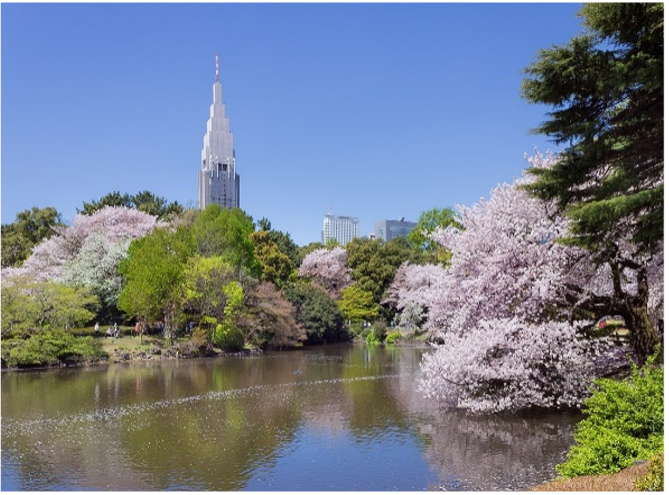
a. While the location is not stated, the first city that elementary students may have heard of is Tokyo. Tokyo is a megalopolis on the East Coast of Japan, formerly known as Edo. It became the capital of Japan during the Tokugawa shogunate (1603–1867). In the subsequent centuries, the Tokyo-Yokohama urban area has become one of the largest in the world, with an estimated population of 37–41 million people in 2025. In this highly urbanized and densely populated environment, Tokyo parks and other natural features are highly prized. For cherry blossom viewing in Tokyo, the most famous destinations are Ueno Park and Shinjuku Gyoen, along with some riverside spots like the Meguro River near Nakameguro. Referring to Tokyo will help provide elementary students with an anchored place where they can explore more of the features of the text in projects and assignments.
Author: Matthew Kizior, M.Ed., Central Catholic High School, Pittsburgh, PA
2026
1. Summary
The children’s story When the Sakura Bloom by Narisa Togo is a sweet tale of Japanese flowering cherry trees (Sakura) responding to the seasons. At first it is late winter, and the trees are dormant. In early March they are still leaf-less. People pass by as they continue with their busy lives. As spring starts to take hold of the lively town (which could be any town or city in Japan), the Sakura trees start to show little green buds. As the trees begin to blossom, the birds visit the new blooms, and people in the community start to notice the clouds of pink blossoms around them. Soon, the town is preparing for the Sakura festival (matsuri). The event brings people together to celebrate the start of spring and cherry blossom season. People gather to picnic under the trees, as the birds sit in the branches above. Soon, a storm sweeps in and blows the bright pink blossoms to the ground, creating another iconic image of springtime in Japan. As green leaves appear on the trees, people start to go back to the hustle and bustle of their daily lives. They will wait another year to celebrate cherry blossom season again.
2. Analysis
Since the book is meant for primary school children, the analysis of When the Sakura Bloom should be straightforward. The story takes us through the typical life cycle of a Sakura tree during the spring, from the time that it is dormant, to blossoming, to losing its blossoms and gaining its leaves. We catch a brief glimpse of the social cycle of the community as well. At first, people are caught up in their busy lives, but as the blossoms open, they notice and take time to appreciate nature, and in turn nature dictates to them an important time of celebration, heralding in the spring. The intertwining tales of the blossoming Sakura trees and the community’s response to them reflect an intricate symbiotic relationship between nature and the community around it. Spring ushers in changes in the community as people pause to witness the transformation of the trees. And as they appreciate and celebrate the changing of the seasons, the people may continue to be inspired by the Sakura trees and plant more of them or at least tend to them. Although it’s a short book, When the Sakura Bloom does a decent job at conveying just how intertwined the natural and human worlds can be.
3. Cultural and Historical Themes
Cultural and historical themes associated with Sakura trees appear throughout the story. A teacher may need to have a deeper understanding of certain facets of Japanese culture, spirituality, and history to notice some of these cultural and historical themes, but once understood, they are not difficult to communicate. Here are some of the cultural and historical themes:
a. Shinto
Shinto, the indigenous faith of Japan, is usually translated “the way of the gods,” or kami (pronounced: KAH-me), deities that pervade every aspect of the natural world. This animistic view of the natural world extends to cherry trees, with the blooming of the trees tied to spiritual and natural renewal. Shinto has organized system of shrines and priests, but Shinto beliefs extend far beyond any organized type of theology.
b. Matsuri and Hanami
It goes without saying that Sakura trees are associated with the Sakura festivals (matsuri) held throughout Japan. Festivals are tied to Japanese history, geography, and spirituality. They continue to mark important moments on the Japanese calendar and in the spiritual centers of the country. Deeply connected to the agricultural roots of Japan and to the rites and rituals of Shinto, matsuri are usually held in neighborhoods or Shinto shrine and Buddhist temple areas to connect to the cycles of nature (harvest festivals, New Year festivals, etc.) or to pay homage to the history or deities associated with a particular shrine or temple. In the context of Sakura blooming, the matsuri are known as Hanami (flower viewing), otherwise known as cherry blossom viewing festivals. During Hanami, vendor booths are set up in communities as families gather for picnics and outings to view the Sakura trees during their peak blossoming time. These types of Hanami viewing opportunities are a cultural staple of Japanese society and are celebrated across the country. Sakura trees have been planted in many places in the U.S., and some communities sponsor Hanami. Look in your area for an opportunity for your students to participate in Hanami.
c. A Symbol of Impermanence (mujō) but also Friendship
The link between nostalgia and melancholy, the cyclical nature of life, and the basic fact nothing lasts forever are key elements in the Japanese philosophical outlook. Heavily influenced by Buddhist, Confucian, and even Shinto sensibilities, the concept of mujō (impermanence) influences many distinct aspects of Japanese culture. The idea of mujō is an influential force on Japanese art and aesthetics and has influenced everything from people’s approach to life to how they build their homes. In the context of Sakura trees, the fleeting and impermanent nature of life takes on new meaning as it is associated with the brief blooming period of the Sakura tree. In addition to representing impermanence, Sakura is also a symbol of lasting friendship and bonds that weather the test of times. Just as the Sakura trees endure until the next year to bloom again, the friendship between two people who have exchanged a cherry blossom (or Sakura tree) will endure just as strongly.
d. Relevance and Reflection: Connecting Across Cultures
Celebrations of Spring, Highlighting Picnic-type Holidays
Matsuri (festivals) are time-honored traditions that continue to have elements of preindustrial social gatherings that have largely vanished from the fabric of American society, at least when it comes to spring celebrations. If a teacher wants to make connections across cultures, they could highlight the similarities between the popular elements of Sakura festivals and popular Easter traditions (brightly colored eggs, sweet candy, bunnies and chicks), or consider how the Fourth of July is celebrated (picnics, outdoor gatherings, concerts, and fireworks). While certain symbolic or historical elements may make the material more complex for younger students to understand, compare-and-contrast assignments and/or easy research projects can help students to see the similarities between celebrations in different cultures.
5. Appropriate Grade Levels
The appropriate grade levels for When the Sakura Bloom would be between pre-school and second grade. This book is intended for early readers who are still grasping the fundamentals and developing their attention spans. This book would work well in first- and second-grade classrooms to help make larger cultural connections and inferences tied into both English and Social Studies lessons.
6. Activities
Given the appropriate grade levels as mentioned in section 5, the types of activities a teacher can do within the classroom vary greatly. For the sake of expediency and to give “building-blocks” type ideas to help teachers start from a place where students can learn about Japan, here are some “first steps” that teachers could use in the classroom before performing more complex tasks with elementary students.
- Crafts and Games – Focus on crafts and games that bring the book to life for students in a way that helps them connect with Japanese culture and Sakura festivals. Cut pink paper into the shape of cherry blossoms, then have children draw on them in a style that helps them to feel ownership over their creation and a deeper connection to cherry blossoms. If teachers want to go beyond crafts, then they could expand into the realm of Japanese games. These would help students to connect with the type of games Japanese children themselves may play as they are out picnicking with their families during Sakura/Hanami festivals. These games could be as simple as chopsticks (https://www.activityvillage.co.uk/chopsticks-game) or as complex as teaching them to play with a kendama.
- Food Tasting – The students could be introduced to Japanese foods, such as ramen, onigiri, sushi, and mochi. Starting with the most basic forms of Japanese food and going through the particular of how to eat each food would help students understand Japanese culture in a more direct and kinesthetic fashion. (Be careful to navigate any dietary restrictions and food allergies among students in your class.)
- Outdoor Field Trip: Environmental Appreciation — After learning about Sakura trees, students could go on a field trip to their local park to listen to their teacher or a park employee introduce them to different species of trees and how they have certain relationships with the wildlife found in the park. If there is an environmental center connected to the park, students can engage in activities like looking at tree bark and leaves under a microscope, shading leaves with a piece of paper and pencil to examine the particular shapes and veins of leaves, and possibly take a closer look at the blossoms and fruit associated with each tree as they bloom in the spring or summer.
7. Common Core Standards
CCSS.ELA-Literacy.RL.K.1
With prompting and support, ask and answer questions about key details in a text.
CCSS.ELA-Literacy.RL.K.2
With prompting and support, retell familiar stories, including key details.
CCSS.ELA-Literacy.RL.K.3
With prompting and support, identify characters, settings, and major events in a story.
CCSS.ELA-Literacy.RL.K.4
Ask and answer questions about unknown words in a text.
CCSS.ELA-Literacy.RL.K.5
Recognize common types of texts (such as storybooks, poems, and so on).
CCSS.ELA-Literacy.RL.K.6
With prompting and support, name the author and illustrator of a story and define the role of each in telling the story.
CCSS.ELA-Literacy.RL.K.7
With prompting and support, describe the relationship between illustrations and the story in which they appear (for example, consider what moment in a story an illustration depicts).
CCSS.ELA-Literacy.RL.K.9
With prompting and support, compare and contrast the adventures and experiences of characters in familiar stories.
CCSS.ELA-Literacy.RL.K.10
Actively engage in group reading activities with purpose and understanding.
8. Literature & Media Connections
a. Elementary Texts & Media
In terms of media or additional books that could be used to help supplement this book in the classroom, consider the Smithsonian and National Cherry Blossom Festival websites, which provide materials students can view and teachers can use to facilitate a lesson or add to in-progress lesson planning. The links are provided here:
Smithsonian: https://learninglab.si.edu/collections/virtual-field-trip-resources-cherry-blossom-festival/Ml5gfdW6vXZVG8B0
National Cherry Blossom Festival: https://nationalcherryblossomfestival.org/media/
Below are three other books that can be used within an elementary school context to help build upon this text for students interested in learning more about the topic of Sakura/Hanami festivals:
- Sakura’s Cherry Blossoms by Robert Paul Weston
- Cherry Blossoms by James Ulak
- Pinkalicious: Cherry Blossom by Victoria Kann
Author: Matthew Kizior, M.Ed., Central Catholic High School, Pittsburgh, PA
2026
© 2024 NCTAsia