Webinars & Presentations
An Exploration of East Asian Visual Narratives
Join us for a discussion of the narratives contained within and beyond a painting, sculpture, or larger artistic program. In this online series we will explore artistic objects and religious sites by considering the iconographic details, historical context, and larger story told when we examine the function and purpose of each object.
-
-
-
- Time Detail:
- Tuesdays, 4pm-8:30pm (PT)
-
-
- Type of Course:
- Webinars & Presentations
-
-
- Registration and Info:
This program will be led by NCTA leader and art historian Melanie King. These sessions are independent of one another so you may select the ones that are most relevant to your teaching.
Feb 24 – Han Dynasty Burials: Funerary Banner of the Lady of Dai
In this session we will consider the burial objects from the Han Dynasty (206 BCE – 220 CE), discuss changing traditions in burial practices, and examine the Funerary banner of the Lady of Dai (Xin Zhui) and related grave goods.
Mar 3 – Longmen Cave Complex
This session will examine the iconographic influences on the elaborate and expansive rock-cut Longmen Buddhist complex, dating to the Tang Dynasty (618-907). While focusing on the Longmen site, we will make iconographic and stylistic connections to other colossal Buddhist sculptural programs.
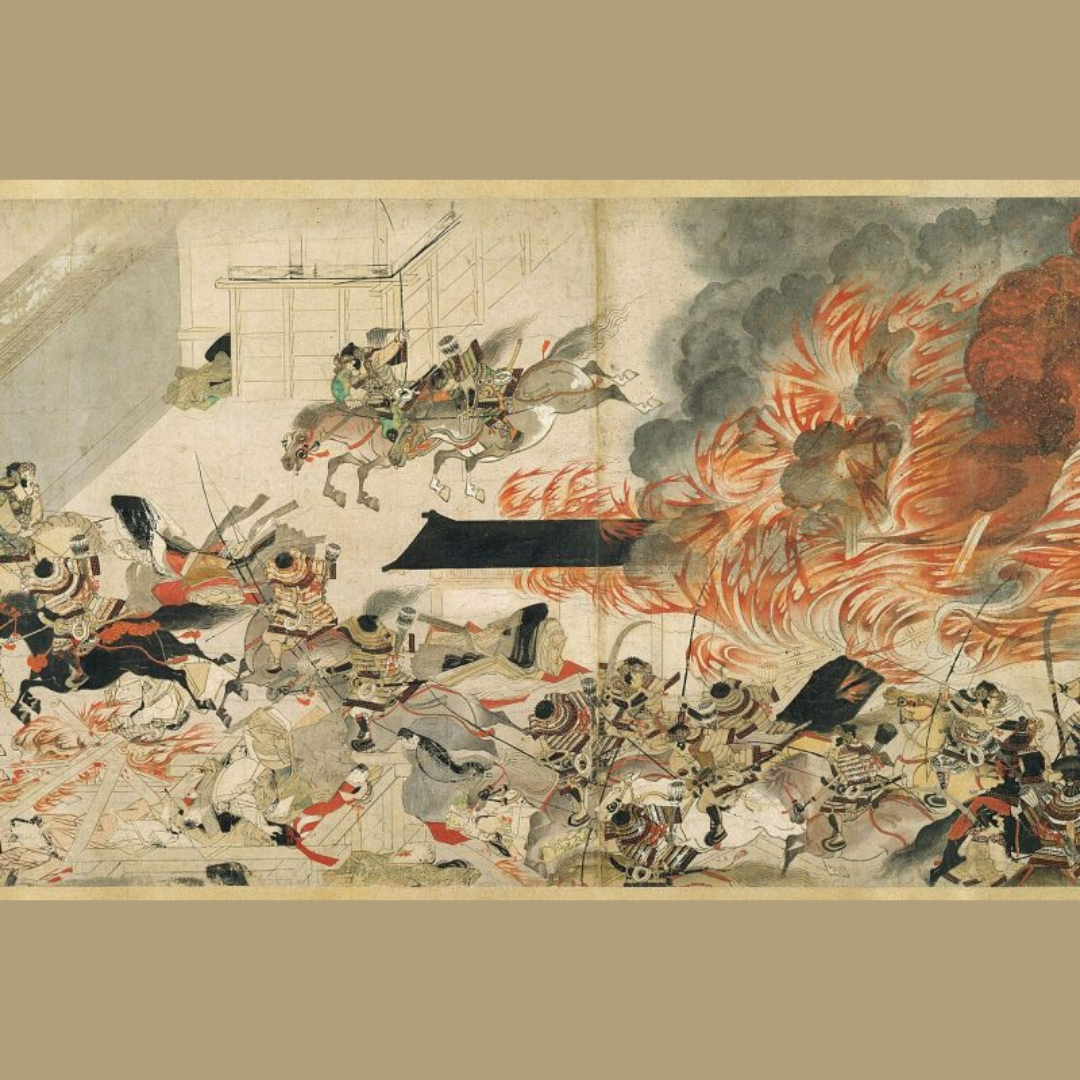
Mar 10 – Night Attack on the Sanjō Palace
This session will highlight the dynamic and dramatic Events of the Heiji Era handscroll. Dating to the Kamakura Period (1185-1333), this handscroll captures the waning moments of the Heian period (794-1185) and conveys shifting stylistic changes in Japanese handscrolls, which will be explored in this session.
Mar 17 – Images of the Southern Barbarians
In this session we will examine depictions of the “Southern Barbarians” (Namban) in Japanese folding screens of the early 17th century. Through these depictions of foreign visitors, we can see what captured the imagination of Japanese artists who may or may not have had first-hand knowledge of these visitors.
Mar 24 – Art of Xu Bing
This session will focus on the life and works of Chinese artist Xu Bing (b. 1955). Well known for A Book from the Sky (1987-1991), Xu Bing’s prolific career has continued to push artistic boundaries of traditional Chinese arts forms while imploring viewers to question what they are seeing and how we experience and interpret his work.